

Key Takeaways
Option A
Prepaid Phone Plans
Pay-before-you-use flexibility with no long-term commitment.
Best for: Consumers who want predictable spending, no credit checks, and the freedom to switch carriers without penalties.
Option B
Postpaid Phone Plans
Full-featured monthly billing with premium perks and device financing.
Best for: Households or individuals who want the latest device financing options, family plan discounts, and premium network priority.
If you want strict monthly budget control with no surprise bills
Prepaid Phone Plans
Prepaid plans cap your spending at the point of purchase. You cannot be billed beyond what you've already paid, making them reliable for fixed-budget households.
If you want to finance a new smartphone through your carrier
Postpaid Phone Plans
Device installment plans are almost exclusively tied to postpaid accounts, spreading the cost of a new phone over 24-36 months without a large upfront payment.
If you have multiple lines to manage for a family
Postpaid Phone Plans
Postpaid family plans typically offer per-line discounts that grow as more lines are added, often making the per-person cost lower than separate prepaid accounts.
If you travel internationally or use your phone infrequently
Prepaid Phone Plans
Prepaid plans let you buy only what you need - including short-term international options - without paying a recurring monthly fee during periods of low usage.
If network performance and data priority during peak hours matter most
Postpaid Phone Plans
On most major networks, postpaid customers receive higher data priority than prepaid users during congestion, which can mean more consistent speeds in busy areas.
How the Two Billing Structures Actually Work
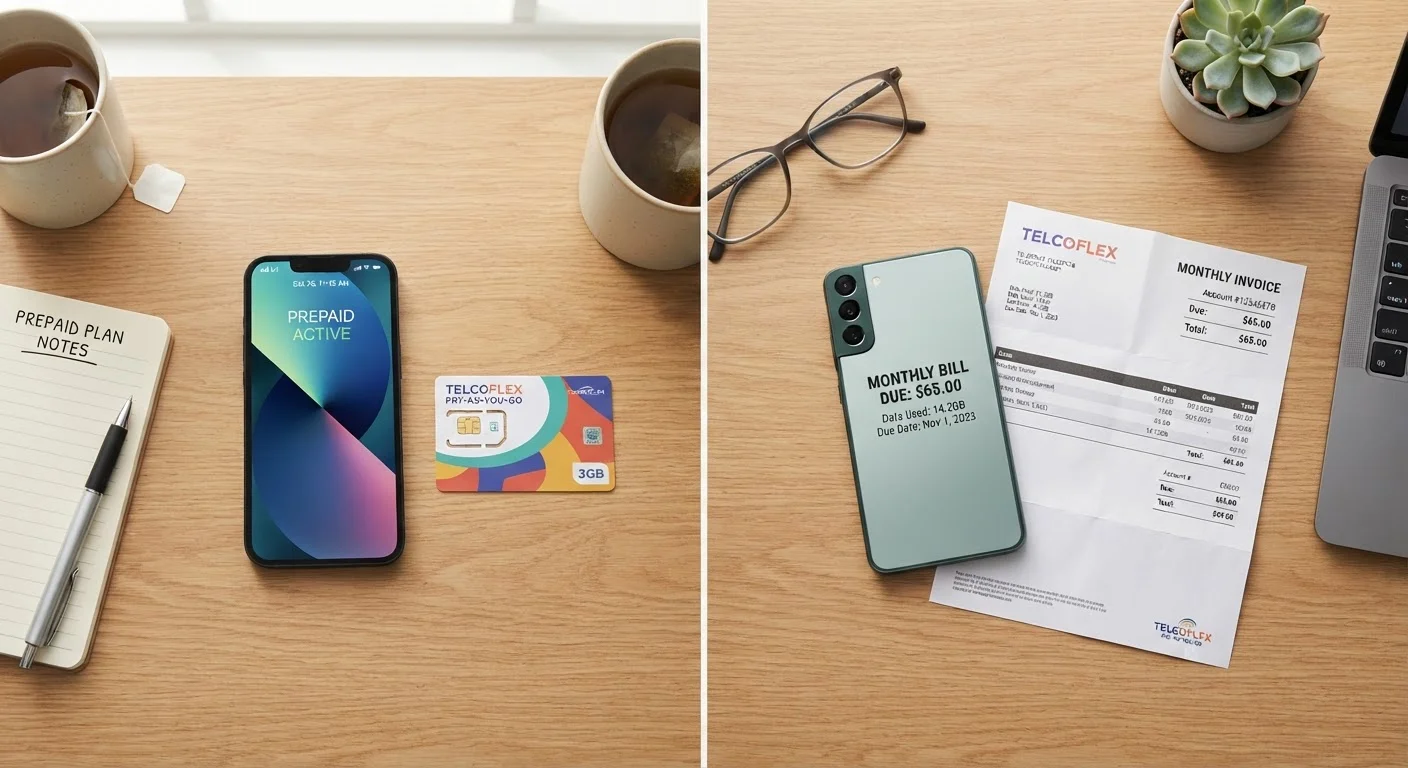
The core difference between prepaid and postpaid is simple: when you pay. With a prepaid plan, you fund your account or purchase a plan before any service is delivered. With a postpaid plan, you use service throughout the month and receive a bill afterward.
Prepaid plans are self-contained. Once the data, talk, or text included in your plan runs out, service either stops or slows to a reduced speed - depending on the plan - until you add more funds or your next renewal date. There are no invoices, no credit checks at sign-up, and no contract binding you to a carrier. Many prepaid plans renew automatically if you set up autopay, but the payment still happens before service continues.
Postpaid plans work on credit. The carrier extends service throughout the billing cycle and charges you at the end. This structure requires a credit check for new accounts, and some carriers may require a deposit if your credit history is limited. In exchange, postpaid customers typically gain access to device financing, premium international roaming options, and bundled perks like streaming subscriptions.
For a deeper look at how the underlying networks connect to plan type, see our article on major carriers vs. MVNOs.
| Criterion | Prepaid | Postpaid |
|---|---|---|
| Payment timing | Pay before service | Billed after monthly usage |
| Credit check required | No | Yes (typically) |
| Contract or commitment | None | Often tied to device financing |
| Device financing | Rarely available | Commonly available |
| Data priority during congestion | Lower priority | Higher priority |
| Family plan discounts | Limited | Widely available |
| Risk of overage charges | Very low - service slows or stops | Possible without plan guards |
| Switching flexibility | High - no penalties | May incur costs if under agreement |
What Changes Under Each Structure
Beyond the billing cycle, several practical differences follow from the structure itself.
Data Priority
During periods of heavy network traffic, carriers typically give postpaid customers priority access to available bandwidth. Prepaid users - and customers on MVNO plans - may experience slower speeds during congestion even if they have data remaining. This doesn't affect everyone equally; in low-traffic areas it's rarely noticeable, but in dense urban environments or at large events it can be significant.
Device Access and Financing
Most carrier installment plans - where the cost of a phone is split into monthly payments - are tied to postpaid accounts. Prepaid customers generally pay for devices outright or bring an unlocked phone they already own. If spreading the cost of a new phone is important to you, our breakdown of phone financing vs. buying outright covers the full range of options.
Flexibility and Lock-In
Prepaid plans carry no contract. Switching carriers - or simply stopping service - requires no termination fee and no negotiation. Postpaid plans may include device financing agreements or promotional credits that are tied to staying with the carrier for a set period. Leaving early can mean repaying remaining device installments or forfeiting promotional credits.
~40%
U.S. wireless subscribers on prepaid
Industry analysts estimate roughly 40% of U.S. mobile subscribers use prepaid or MVNO plans, reflecting significant market share for non-contract options.
24-36 months
Typical postpaid device installment term
Major U.S. carriers commonly spread device costs over 24 to 36 monthly payments, tying customers to postpaid accounts for the financing period.
2-5 lines
Where postpaid family discounts become significant
Per-line pricing on postpaid family plans often drops meaningfully between the second and fifth line, according to carrier published rate structures.
Choosing the Structure That Matches Your Situation
Neither prepaid nor postpaid is the objectively better choice - the right fit depends on how you use your phone, how many lines you need, and what role your phone plan plays in your broader budget.
Prepaid tends to suit single-line users who prioritize spending control, people who are new to establishing credit, frequent travelers who want short-term flexibility, or anyone who simply doesn't want to be locked in. Because there's no invoice to track, the risk of unexpected charges is essentially eliminated.
Postpaid tends to make sense when you're managing multiple lines for a household, want to access device financing without a large upfront cost, or need premium features like extensive international roaming. Family plans on postpaid can become cost-competitive - or even less expensive per line - once discounts stack across several lines.
When you're ready to compare specific plans side by side, the framework in our guide on reading a phone plan side by side can help you evaluate options on equal terms. And once you're on a plan, getting the most out of any phone plan offers practical ways to use your service more effectively regardless of which structure you choose.
Autopay and Discounts Apply to Both Structures
Many prepaid and postpaid plans offer a monthly discount - often $5-$10 per line - when you enroll in autopay with a debit card or bank account. Credit card autopay may not qualify for the same discount on some carriers. Check the specific terms of any plan you're considering, as discount structures vary.