

Key Takeaways
Entry Requirements for Americans
The good news: Americans holding a valid U.S. passport can enter Japan without a visa for stays of up to 90 days for tourism or short-term business visits. Japan grants this under a reciprocal visa-exemption arrangement, meaning you don't need to apply in advance through a consulate. That said, "visa-free" has nuances worth understanding - see our overview of what visa-free entry actually means for U.S. passport holders before assuming the process is completely frictionless.
At the port of entry, you'll receive a landing permission stamp indicating your allowed stay. Overstaying is taken seriously and can result in deportation or future entry bans. You'll also need to provide a return or onward ticket and a general itinerary. Entry requirements can change, so always confirm current conditions via the Japan Tourism Agency or U.S. Embassy resources before departure.
Always Verify Entry Rules Before You Travel
Entry requirements, health documentation, and border policies can change without much advance notice. The information here reflects general conditions but is not a substitute for checking directly with the Embassy of Japan or the official Japan Tourism Agency website before your departure date. Do not rely solely on any single third-party source, including this article, for final confirmation of entry rules.
Getting Around: Trains, IC Cards, and City Navigation
Japan's rail network is one of the most reliable in the world, and mastering it unlocks the country. In major cities like Tokyo and Osaka, the subway and commuter rail systems are dense but logical once you understand the fare structure. The single most useful tool you can carry is an IC card - a rechargeable contactless smart card (Suica and ICOCA are common examples) that works across subway, JR, and many bus lines. You load yen onto it, tap in and out, and the correct fare is deducted automatically. IC cards also work at many convenience stores and vending machines.
For intercity travel, the Shinkansen (bullet train) is fast, punctual, and genuinely impressive. Tourists spending multiple weeks traveling broadly may find a Japan Rail Pass cost-effective, though it requires purchasing before you leave the U.S. and isn't always the cheapest option for shorter itineraries. Use official JR or third-party rail calculators to run the numbers for your specific route plan.
Load your IC card with at least 3,000-5,000 yen before leaving the airport - machines at city stations can have queues, and you'll want to tap right through on arrival.
Airport and major hub stations have IC card vending machines with English interfaces, making this the smoothest place to set up before you're navigating an unfamiliar city center.
Screenshot your hotel address in Japanese characters before checking in - show it to taxi drivers or use it to confirm navigation if your data connection drops.
Many hotel and ryokan addresses include building names that don't translate cleanly in romanized form; Japanese script removes ambiguity for local drivers and locals giving directions.
Cash Culture and Practical Money Tips
Despite Japan's reputation for technological sophistication, the country runs heavily on cash. Many traditional restaurants, smaller shops, rural lodgings, and temple admission counters are cash-only. Credit cards are more widely accepted in department stores, chain hotels, and tourist-facing businesses in major cities - but you cannot rely on them exclusively.
The most reliable way to access yen is through 7-Eleven and Japan Post ATMs, which consistently accept foreign cards with a Visa, Mastercard, or Cirrus logo. Airport currency exchange is convenient but often less favorable in rate. Notify your bank before departure to avoid card holds, and understand your foreign transaction fee situation. Carrying the equivalent of $100-$200 USD in yen at all times is a reasonable buffer in most itineraries.
90 days
Visa-free stay allowed for U.S. tourists
Per Japan's visa exemption arrangement with the United States, valid for tourism and short-term stays.
~30 million
International visitors to Japan annually (pre-pandemic peak)
Japan Tourism Agency figures showed record inbound tourism in 2019; numbers have been recovering strongly since border reopening.
7-Eleven & Japan Post ATMs
Most reliable ATMs for foreign cards
Widely reported by travelers and financial sources as the most consistent option for international Visa and Mastercard withdrawals.
Etiquette and Cultural Norms Worth Knowing
Japan has a strong culture of consideration for others in shared spaces, and visitors who make an effort to follow basic norms are genuinely appreciated. A few non-negotiables: don't eat or drink while walking in most public areas, keep your voice low on trains and subways (phone calls are generally avoided), and remove your shoes when entering a home or traditional inn (ryokan). Most restaurants will make it obvious when shoe removal is expected.
At onsen (hot spring baths), which are a quintessential Japanese experience, the rules are specific: rinse thoroughly before entering the communal bath, do not submerge towels in the water, and note that most onsen prohibit entry for guests with visible tattoos, though policies are slowly evolving at some facilities. Asking ahead is always a smart move.
Tipping is not practiced in Japan - it can even cause confusion or mild offense. Excellent service is considered standard, not something requiring a monetary bonus. Accept this with gratitude and move on.
Health, Safety, and Staying Connected
Japan ranks among the safest destinations in the world by virtually every metric - violent crime against tourists is rare, and the country is well-prepared for emergencies including natural disasters (earthquakes and typhoons are genuine considerations depending on timing and region). Download the Japan Meteorological Agency app or a similar alerts service before you go.
For navigation, Google Maps works extremely well in Japan, including for transit directions. To use it reliably, you'll need connectivity - either a pocket Wi-Fi rental (widely available at airports) or a local data SIM card. For context on managing your data safely while abroad, our guide on digital safety on the road covers what to consider before connecting to foreign networks.
Pharmacies (drugstores) are abundant in cities and carry familiar over-the-counter remedies, though packaging is in Japanese. Travel insurance that includes medical evacuation coverage is worth serious consideration. Japan's healthcare system is high-quality, but costs for uninsured foreign visitors can add up.
Earthquake Preparedness Is Real in Japan
Japan sits on one of the world's most seismically active zones, and minor tremors are common. Familiarize yourself with basic earthquake safety before you go - most hotels post guidance in rooms. Register with the U.S. Embassy's Smart Traveler Enrollment Program (STEP) so you can receive alerts and be located in an emergency.
Choosing When and Where to Go
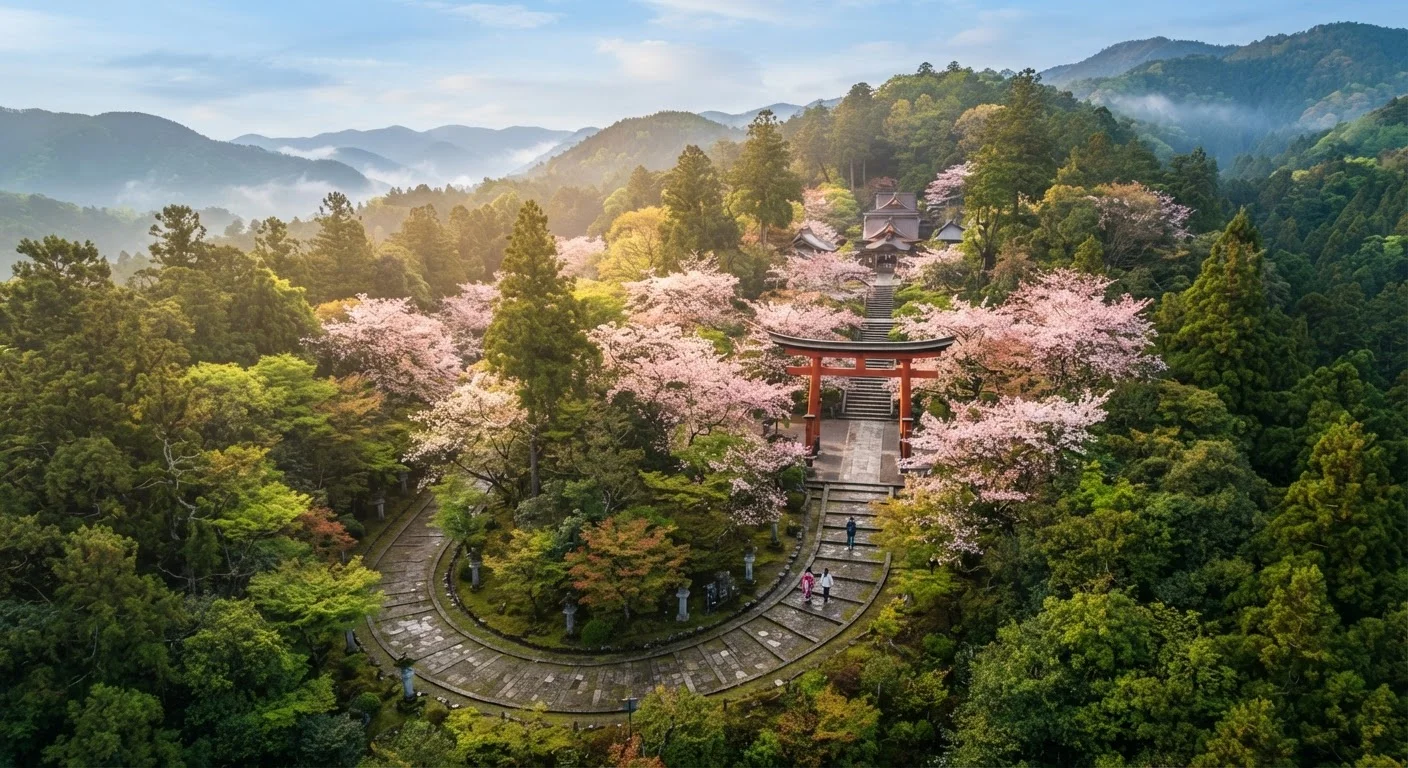
Japan rewards repeat visits because the country changes dramatically by season. Cherry blossom season (typically late March through early April) and autumn foliage (mid-November in many regions) are the most visually spectacular - and the most crowded. Prices for flights and accommodation spike accordingly, and popular spots like Kyoto's Arashiyama or Tokyo's Shinjuku Gyoen can feel genuinely overwhelming on peak weekends.
Summer (July-August) brings heat, humidity, and typhoon risk in some regions, but also vibrant festivals. Winter is the least crowded season outside of ski areas and offers a quieter experience of major cities. First-time visitors most commonly anchor itineraries in Tokyo and Kyoto, with side trips to Osaka, Hiroshima, and Nara. Less-traveled regions like Tohoku, Kyushu, and the San'in coast offer rewarding experiences with far fewer foreign tourists.
If you're new to independent trip planning, our travel planning guide for first-timers walks through the full process from research to packing. And if you want to deepen your destination research before booking anything, see how experienced travelers research unfamiliar places for a more structured approach.