

Key Takeaways
Why Petty Crime Targets Tourists - and How Criminals Choose Victims
Petty crime in tourist-heavy destinations is rarely random. Pickpockets, scammers, and bag-snatchers typically work the same spots - busy transport hubs, crowded markets, popular overlooks - and they select targets based on observable signals: distraction, bulging back pockets, phones held loosely, maps open on screens, and the general look of someone who doesn't know where they're going.
Understanding that you are being observed before anything happens is the most important mindset shift you can make. The moment you step off a train in an unfamiliar city, you are, to some degree, being assessed. That's not cause for paranoia - it's a reason to move with intention and present fewer easy opportunities.
Before you travel, spend time on destination-specific research. How experienced travelers research unfamiliar places gives you a structured approach to understanding local crime patterns, which neighborhoods carry more risk, and what scams are currently circulating - information that's far more useful than generic safety tips.
Crime Rates Vary Within Destinations
A city or country labeled 'high crime' on a general advisory often contains neighborhoods that are extremely safe alongside others that carry real risk. Blanket caution can cause travelers to miss wonderful areas unnecessarily. Destination-specific, neighborhood-level research - from travel forums, recent visitor accounts, and local tourism guidance - gives a far more accurate picture than country-level statistics alone. Always cross-reference multiple sources.
Smarter Ways to Carry Valuables
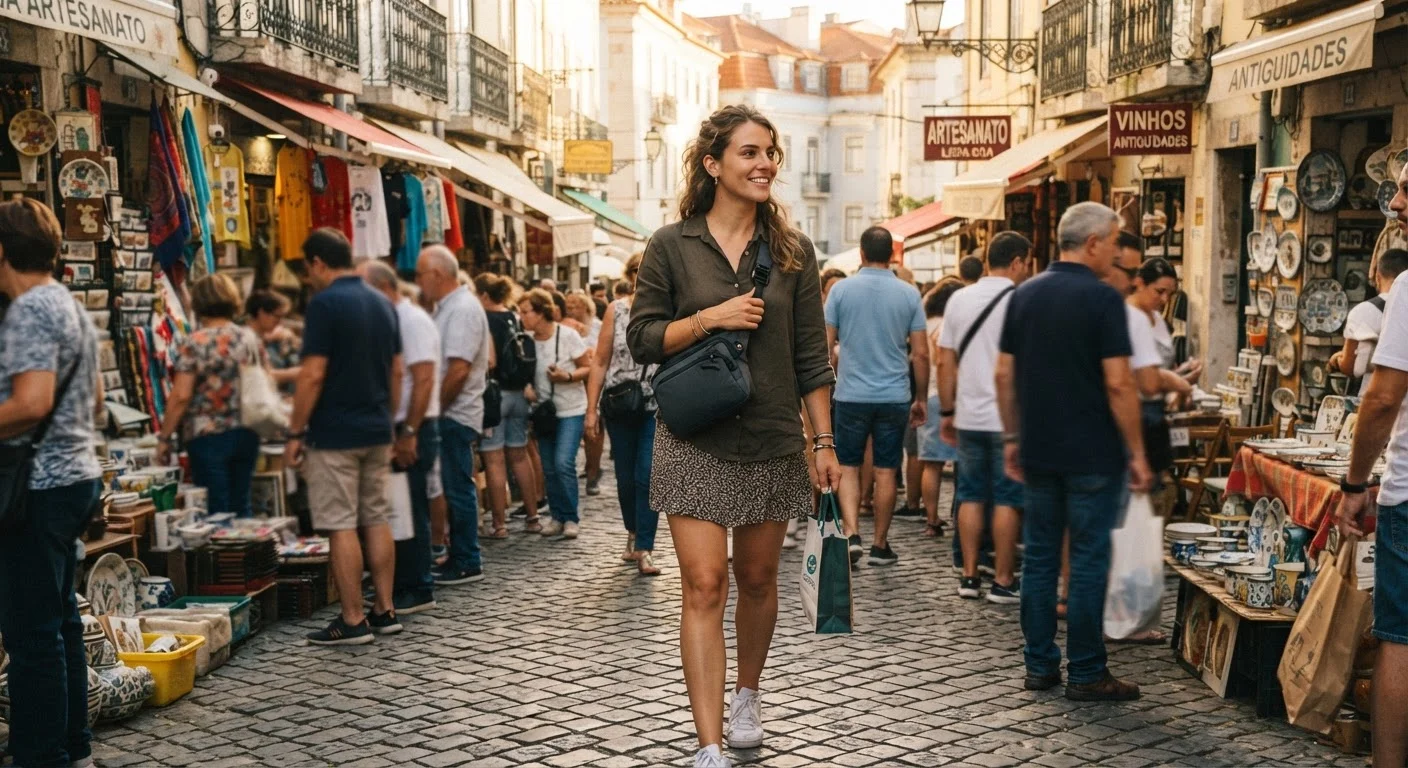
The single most impactful habit change most travelers can make is rethinking how they carry things, not just what they carry. A few principles hold up consistently across high-crime destinations:
Distribute cash and cards across at least two separate locations on your body or in your bag.
If one wallet or pocket is compromised, you retain access to funds and identification. Losing everything in a single moment is the scenario you're designing against.
Wear bags across your body with the zipper facing inward, or use a bag you can keep in front of you in crowds.
Backpacks worn on the back in dense crowds are one of the most commonly targeted items globally. Repositioning the bag changes the geometry of access entirely.
Leave high-value jewelry, luxury watches, and non-essential electronics at home or locked in accommodation.
Visible wealth signals opportunity and can escalate opportunistic theft into more confrontational situations. What isn't present can't be taken.
Know your destination's emergency numbers and the address of the nearest U.S. consulate or embassy before you need them.
In the aftermath of theft, disorientation slows response time. Having this information memorized - not just stored on a now-stolen phone - keeps you in control.
Avoid checking your phone, map, or wallet while standing in open, high-foot-traffic areas.
The act of reaching for a device or opening a bag in a crowd is one of the most reliably observed trigger moments for opportunistic theft. Step to the side, enter a shop, or find a wall to stand against.
For solo travelers, these habits matter even more since there's no travel companion to watch your bag at a café table. Solo travel safety considerations covers additional risk factors worth understanding before heading out alone.
Recognizing and Deflecting Common Scams
Scams targeting tourists tend to follow recognizable scripts. A few of the most widely reported across multiple regions:
- The distraction team: One person creates a commotion, spills something on you, or asks for help - while an accomplice works your pockets or bag.
- The friendship bracelet: Someone ties something to your wrist or hands you an item, then demands payment you can't easily refuse in a public scene.
- The "broken" taxi meter: A driver claims their meter is malfunctioning and quotes a flat rate - often many times the fair price.
- The unofficial helper: Someone at a train station, ATM, or ticket machine insists on helping you, then either overcharges for assistance or uses the moment to observe your PIN.
Awareness is the primary defense. A firm, polite "no thank you" and continuing to walk is almost always effective. Engaging - even to argue - extends the interaction and gives a potential partner in crime more time to act. Common myths about traveling in Southeast Asia illustrates how regional scam patterns differ from what travelers often expect, which is a useful reminder that destination-specific research matters.
Your Digital Profile Is Also at Risk
Physical theft gets most of the attention, but your devices and accounts are equally - sometimes more - valuable to criminals. A stolen unlocked smartphone can expose banking apps, email, travel bookings, and stored passwords within minutes.
Keep your phone locked with a strong PIN or biometric lock at all times in public. Be cautious about using public Wi-Fi for anything sensitive. Digital safety on the road goes deeper on what risks public networks actually pose and how to manage them without turning every trip into an IT project.
#1
Most commonly stolen item from tourists
Smartphones consistently rank as the most frequently targeted item in tourist-area thefts, according to travel safety reports from multiple European and Latin American cities.
70%+
Of tourist theft occurs in crowd settings
Research from European travel security organizations indicates that the large majority of pickpocketing incidents occur in dense pedestrian environments such as transit hubs and markets.
Before you leave home, make sure two-factor authentication is active on your most important accounts. If your phone is stolen, this layer of protection can be the difference between a lost device and a compromised identity.
This article provides general travel safety information for educational purposes. Always verify current safety conditions and entry requirements through official government sources, such as the U.S. Department of State's travel advisories, before your trip.