

| Best for vegetable gardens | Straw or compost |
| Best for landscape beds & trees | Wood chips or shredded bark |
| Longest-lasting mulch type | Rubber or stone (inorganic) |
| Recommended organic mulch depth | 2-4 inches |
| Free mulch option | Shredded fallen leaves |
| Mulch to avoid near edibles | Rubber mulch, treated wood products |
Why Mulch Matters More Than Most Gardeners Realize
Mulch is one of the most versatile tools in any gardener's toolkit, yet it's often treated as an afterthought. A properly mulched bed retains soil moisture, suppresses weed growth, moderates soil temperature, and - depending on the type - gradually enriches the ground beneath it. Understanding which mulch fits which situation helps you get the most out of every square foot of your garden.
Mulch falls into two broad categories: organic (materials that decompose over time) and inorganic (materials that do not break down). Each category has its own strengths. Organic mulches feed soil biology as they break down, making them a natural companion to good soil health practices. Inorganic mulches offer longer-lasting coverage with virtually no maintenance.
| Best for vegetable gardens | Straw or compost |
| Best for landscape beds & trees | Wood chips or shredded bark |
| Longest-lasting mulch type | Rubber or stone (inorganic) |
| Recommended organic mulch depth | 2-4 inches |
| Free mulch option | Shredded fallen leaves |
| Mulch to avoid near edibles | Rubber mulch, treated wood products |
Common Mulch Types and Their Best Uses
Here is a practical overview of the most widely available mulch types and where each one performs best.
Wood Chips and Shredded Bark
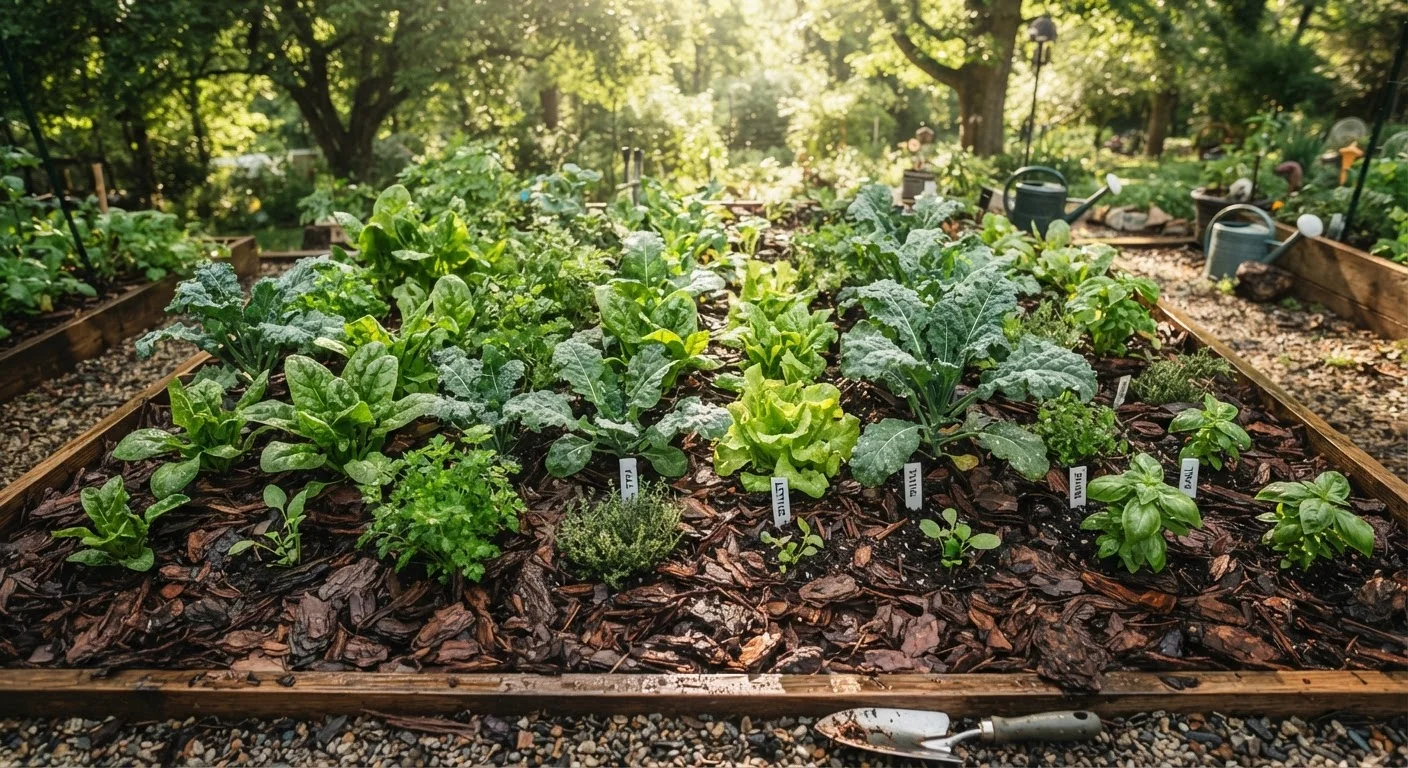
Wood chips are among the most popular organic mulches for landscape beds, pathways, and around trees and shrubs. They decompose slowly, providing coverage for one to three years before needing to be topped up. Shredded bark tends to knit together and resist washing away in rain, making it a solid choice for sloped areas. Avoid piling wood chip mulch directly against plant stems or tree trunks, as this can trap moisture and encourage rot.
Straw
Straw (not hay, which contains weed seeds) is a go-to mulch for vegetable gardens. It's lightweight, easy to apply and remove, and breaks down quickly enough to be tilled in at season's end. It also keeps soil-borne pathogens from splashing up onto vegetable leaves during rain - a practical benefit for crops like tomatoes. Since straw decomposes fast, you'll likely need to refresh it mid-season.
Compost
Applied as a 1-2 inch top dressing, finished compost functions as both mulch and soil amendment. It feeds beneficial microorganisms, improves soil structure, and helps regulate moisture. For best results, use fully finished compost rather than fresh material. This approach pairs naturally with a home composting routine.
Shredded Leaves
Fallen leaves run through a mower or shredder create a free, nutrient-rich mulch. Whole leaves can mat together and block water penetration, so shredding is important. Shredded leaves are especially effective around perennial beds and woodland garden areas. They break down over winter and feed earthworms and soil microbes in the process.
Grass Clippings
Fresh clippings applied in thin layers (no more than an inch at a time) work well in vegetable gardens. Thick layers compact, go anaerobic, and produce unpleasant odors. Avoid using clippings from lawns treated with herbicides, as residues can harm garden plants.
Rubber Mulch
Made from recycled tires, rubber mulch is a long-lasting inorganic option commonly used in playgrounds and decorative landscape beds. It does not decompose or attract pests, and it holds color well. However, it provides no soil nutrition, can heat up significantly in direct sun, and may not be appropriate near edible plants. It is best suited to permanent, non-edible landscape areas.
Gravel and Stone
Gravel, pea stone, and decorative rock are durable inorganic options suited to drought-tolerant plantings, Mediterranean-style gardens, and areas prone to erosion. They allow excellent drainage, which some plants require. Stone mulches retain and radiate heat, which can be beneficial in cold climates but stressful for heat-sensitive plants in summer.
Good mulch management connects directly to efficient watering - a topic explored in depth in our guide on common watering mistakes.
Organic Mulch
Any mulch material derived from once-living matter - such as wood chips, straw, or leaves - that breaks down over time and adds organic content to the soil.
Inorganic Mulch
Mulch made from non-decomposing materials such as gravel, stone, or rubber. It provides long-lasting ground cover but does not improve soil nutrition.
Soil Amendment
Any material mixed into or applied to soil to improve its structure, nutrient content, or biological activity. Compost used as mulch acts as a slow-release amendment.
Mulch Depth
The thickness of the mulch layer applied to a garden bed. Most organic mulches are most effective at 2-4 inches - deep enough to suppress weeds but not so thick that water and air cannot penetrate.
Anaerobic Decomposition
Breakdown of organic material in the absence of oxygen. Thick, compacted layers of grass clippings or wet leaves can create anaerobic conditions, producing foul odors and inhibiting healthy soil biology.
Application Tips and Things to Avoid
Getting mulch depth right matters as much as choosing the right type. Most organic mulches work best applied at a depth of 2-4 inches. Too thin and weeds push through easily; too thick and water may not penetrate to root zones - a concern especially relevant for soil moisture management.
- Keep mulch away from stems and trunks. A gap of a few inches prevents rot and discourages pests.
- Wet the soil before applying. Mulching dry soil traps moisture deficit rather than conserving existing moisture.
- Refresh organic mulches annually. Decomposition is a feature, not a flaw - but it means coverage needs topping up.
- Choose appropriate mulch for edible areas. Avoid rubber mulch or treated wood products near vegetable gardens or fruit trees.
Mulch choices also connect to broader sustainable yard management - using locally sourced or recycled materials, reducing bare soil exposure, and supporting healthy soil ecosystems season after season.
This article is for general informational and educational purposes. Results in your garden will vary depending on local climate, soil conditions, and plant selection. Consult your local cooperative extension service for region-specific recommendations.