

Key Takeaways
Sump Pump
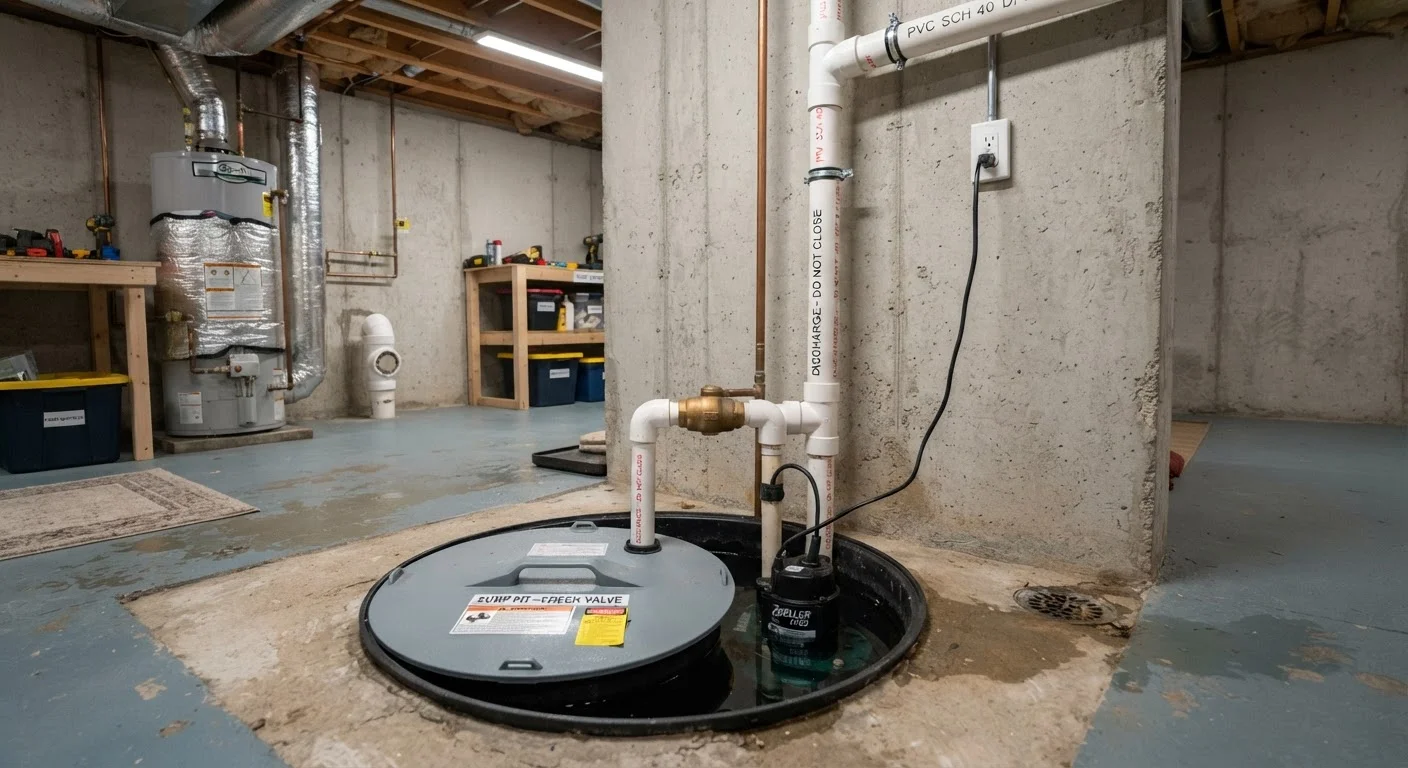
A sump pump is a device installed in the lowest point of a basement or crawl space - typically inside a pit called a sump basin - that automatically pumps out accumulated groundwater before it can flood your living space. When water rises in the pit to a set level, a float switch triggers the pump to turn on and push water through a discharge pipe away from the home's foundation.
Most residential sump pumps are either submersible (motor sits inside the water-filled pit) or pedestal-style (motor sits above the pit on a column). Submersible models are generally quieter and better suited to high-volume water conditions.
What a Sump Pump Actually Does
When groundwater - from rain, snowmelt, or a high water table - saturates the soil around your foundation, it will seek the path of least resistance. For many homes, that path leads into the basement or crawl space. A sump pump intercepts that water before it spreads across your floor.
The pump sits inside a sump pit: a small, gravel-lined hole dug into the lowest point of your basement floor. Water flows into this pit through drain tile (a perforated pipe that runs around the interior perimeter of your foundation) or simply by seeping in through the soil. Once the water reaches a trigger point, the float switch - think of it like a toilet tank float - lifts and activates the pump motor. Water is pushed up through a discharge pipe that leads outside, away from the house.
For homeowners in wet climates, this cycle might happen dozens of times during a single rainstorm. That's exactly what the system is designed for. Understanding the cycle helps you recognize when something isn't right. See our guide to keeping your basement dry for a fuller picture of how drainage, sealing, and humidity control work together.
Types of Sump Pumps and Their Differences
The two most common residential sump pump configurations each have practical trade-offs:
- Submersible pumps sit entirely within the pit, submerged in water. The motor is sealed, which keeps the unit quieter and allows the pit to be covered - reducing odors and debris entry. These handle higher volumes of water well and are the most common choice for finished basements.
- Pedestal pumps mount the motor on a column above the pit, with only the intake sitting in the water. They're easier to service and typically less expensive, but louder and better suited to narrower sump pits or homes where water volume is modest.
Some homeowners also install a combination system that pairs a primary AC-powered pump with a battery-backup pump. The backup activates automatically if the primary fails or loses power - a common scenario since major storms often knock out electricity at the same moment they're generating the most runoff.
7-10 years
Typical sump pump lifespan
General industry guidance suggests most residential sump pumps should be evaluated or replaced within this window, especially in high-use climates.
~$10,000
Average cost of basement flood damage
The Insurance Information Institute has cited figures in this range for water damage claims, though costs vary widely by home size and flood severity.
1 in 50
Homes filing a water damage claim annually
According to insurance industry data, water damage is among the most common homeowner insurance claims filed each year in the United States.
How to Test Your Sump Pump
Testing is simple and should be done at least once a year - ideally before spring rains or your region's heaviest wet season. Here's a straightforward approach:
- Locate the pit and confirm the pump is plugged in. Many sump pumps use two cords - one for the pump motor and one for the float switch. Both should be connected.
- Pour water in slowly. Use a garden hose or several buckets to fill the sump pit until water rises and triggers the float switch. The pump should start automatically.
- Watch and listen. The pump should run smoothly and the water level should drop quickly. Once the pit empties, the pump should shut off on its own.
- Check the discharge pipe. Go outside and confirm water is actually flowing out of the pipe and reaching a point well away from your foundation.
If the pump doesn't activate, runs but doesn't clear the water, or doesn't shut off, it's time to have a qualified plumber or sump pump specialist inspect the system. Do not attempt to open or repair the pump motor yourself - always defer to a licensed professional for mechanical repairs.
Test Before the Rainy Season Arrives
Don't wait for a storm to find out your sump pump isn't working. Running a bucket test in early spring - before heavy rains hit - gives you time to address any problems without urgency. Mark your calendar so the test becomes a regular annual habit, like changing smoke detector batteries.
Maintenance, Lifespan, and When to Call a Pro
Sump pumps are reliable but not maintenance-free. A few routine habits extend their service life and reduce the chance of failure at the worst possible time:
- Clear the pit of debris seasonally. Gravel, dirt, and sediment can clog the intake screen.
- Check the discharge pipe for ice blockages in winter or animal nesting in warmer months.
- Test the float switch manually by lifting it to confirm it triggers the motor.
- Inspect the check valve - the one-way valve on the discharge pipe that prevents water from draining back into the pit. A faulty check valve forces the pump to work harder than necessary.
Most sump pumps have a working life of 7-10 years. If yours is approaching that range, especially in a wet climate where it cycles frequently, proactive replacement before a major storm season is a reasonable precaution. A plumber can assess whether the existing pit and drainage configuration are adequate for your home's water load.
For context on what whole-basement water management looks like, our article on what waterproofing a basement actually means explains how interior drainage systems like sump pits relate to exterior membrane treatments. If you're evaluating a home in a flood-prone area, questions worth asking before buying in a flood zone covers the broader insurance and structural considerations.