

Key Takeaways
Why Basement Moisture Is a Structural and Health Issue
A damp basement is rarely just a storage inconvenience. Chronic moisture degrades concrete over time, corrodes steel reinforcement, and can compromise the structural integrity of your foundation. Equally important, sustained humidity above roughly 60% relative humidity creates the conditions mold and mildew need to colonize - and because air rises through a home, basement air quality directly affects the living spaces above it.
Understanding moisture control as a layered system - not a single product fix - is the key shift homeowners need to make. Each layer addresses a different pathway water takes into your home.
Don't Treat Symptoms Without Finding the Source
Applying interior waterproofing paint or patching visible cracks without addressing the underlying drainage problem often provides only temporary relief. Water under pressure will find another path. Investing in exterior corrections first - grading, gutters, downspouts - before moving to interior measures is almost always the more effective and durable sequence.
Where Water Comes From: Identifying the Source
Before spending money on any solution, identify which type of moisture you're dealing with. There are two distinct categories:
- Liquid water intrusion: Water entering through cracks, wall-floor joints, window wells, or porous concrete under hydrostatic pressure (the weight of saturated soil pushing inward).
- Condensation: Warm, humid air meeting cool basement walls and floors and depositing moisture - common in summer months even in otherwise dry basements.
A simple test helps distinguish them: tape a piece of plastic sheeting tightly to a damp wall section for 24-48 hours. If moisture appears on the room-side surface, condensation is the culprit. If moisture collects behind the plastic against the wall, water is entering from outside.
Many basements experience both problems simultaneously, which is why a layered approach matters. For a deeper look at how interior and exterior interventions differ, see our guide on what waterproofing a basement actually means.
98%
Basements experiencing water intrusion at some point
The American Society of Home Inspectors has reported that the vast majority of basements will experience some form of water intrusion over the life of a home.
60%+
Relative humidity threshold enabling mold growth
EPA guidance indicates mold and mildew can establish and grow when indoor relative humidity consistently exceeds approximately 60%.
4-6 ft
Recommended downspout extension from foundation
Building science professionals commonly recommend extending downspouts at least 4 to 6 feet from the foundation to divert roof runoff away from basement walls.
Exterior Drainage: Your First Line of Defense
The most cost-effective moisture management happens outside, before water ever reaches your foundation. Three factors account for the majority of exterior water problems:
- Grading: The soil around your home should slope away from the foundation - a general guideline is at least a 6-inch drop over the first 10 feet. Settled or low spots allow water to pool and saturate the soil directly against your walls.
- Gutters and downspouts: A clogged or undersized gutter system deposits roof runoff right at the foundation. Clean gutters seasonally and extend downspouts at least 4-6 feet from the house. Our full resource on how gutters work and how to maintain them covers this in detail.
- Window wells: Basement egress windows need properly installed and gravel-filled window wells with a functional drain at the bottom. Standing water in a window well will find its way inside.
Correcting these exterior conditions first often dramatically reduces or eliminates interior water problems at relatively low cost.
Sealing Cracks and Wall Penetrations
Once exterior drainage is addressed, inspect the foundation walls and floor carefully. Common entry points include:
- Vertical or stair-step cracks in poured concrete or block walls
- The cove joint where the wall meets the floor
- Pipe penetrations, window frames, and utility entries
Hairline cracks and minor seepage can often be addressed with hydraulic cement (for active leaks) or polyurethane injection foam, which expands to fill voids in cured concrete. Masonry waterproofing coatings applied to interior walls can slow minor vapor transmission through porous concrete, though they are not rated to hold back significant hydrostatic pressure.
Horizontal Cracks Need Immediate Professional Attention
Horizontal cracks in a block or poured concrete foundation wall indicate that lateral soil pressure is actively pushing the wall inward - a structural problem, not just a sealing issue. Do not attempt to patch and ignore these. A licensed structural engineer or foundation specialist should evaluate the wall to determine whether bracing, anchoring, or other reinforcement is needed. Delaying can allow the condition to worsen significantly.
Horizontal cracks - those running along the length of a wall - indicate inward pressure from soil and are a structural concern, not just a sealing problem. These require professional evaluation promptly. For context on how water damage can quietly escalate before it becomes obvious, our article on how small leaks become big structural problems is a useful parallel.
Interior Drainage Systems and Sump Pumps
When hydrostatic pressure is too significant for surface sealing alone, an interior drainage system redirects water before it pools on the floor. A perimeter drain channel is installed along the inside base of the foundation walls, channeling water to a sump pit where a sump pump discharges it away from the home.
This approach doesn't stop water from entering the wall, but it manages it so it cannot accumulate and cause damage. It's a proven, widely used method for basements in high-water-table areas or regions with heavy seasonal rainfall.
For homeowners new to this equipment, our dedicated guide to sump pump basics explains how these systems work, how to test them, and why a battery backup matters. Interior drainage systems are significant renovation projects requiring permits in many jurisdictions - confirm local requirements before beginning.
Controlling Humidity Inside the Basement
Even with water intrusion fully resolved, basement humidity from condensation requires its own strategy. Key practices include:
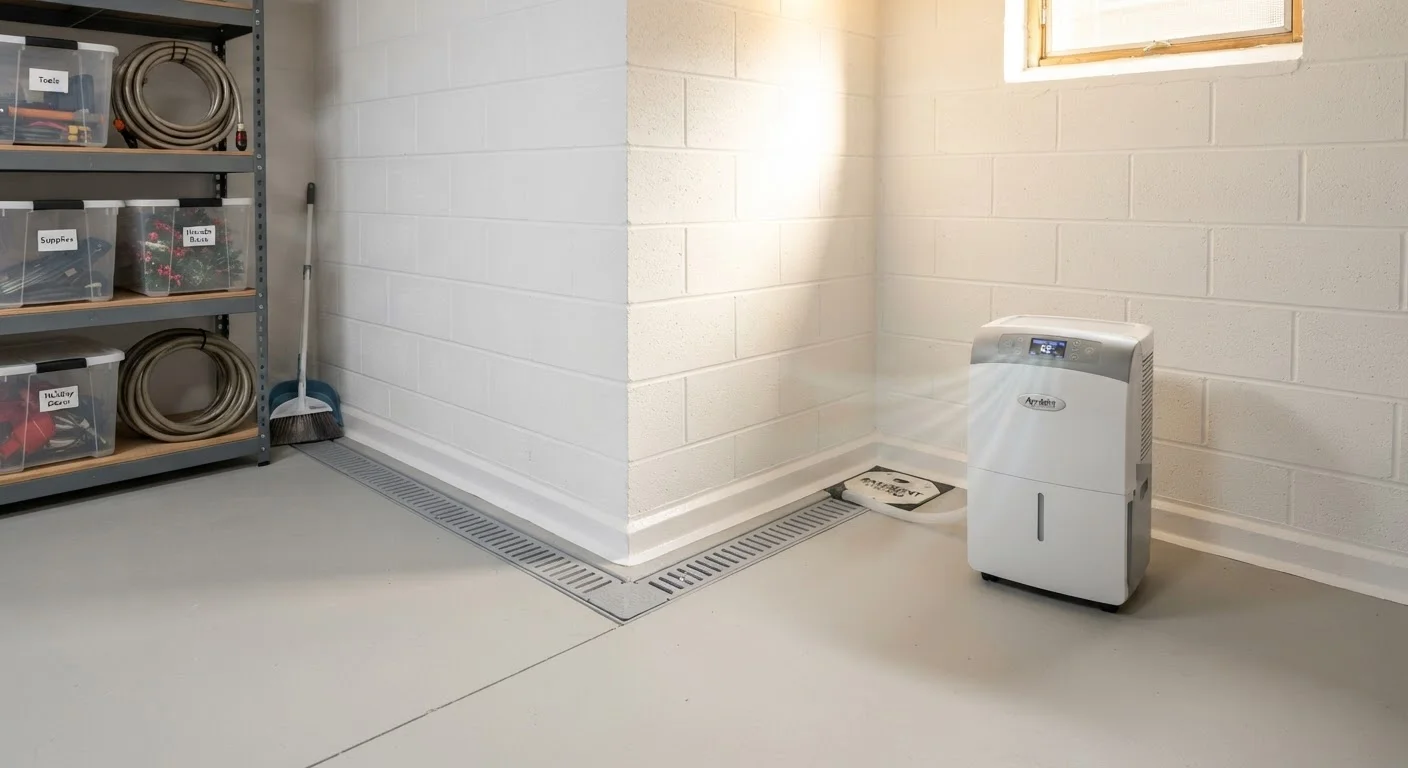
- Dehumidification: A properly sized dehumidifier - matched to your basement's square footage and typical humidity load - is the most reliable tool. Target a relative humidity between 30% and 50%. Units with a built-in humidistat and continuous drain hose are more practical than models requiring manual emptying.
- Ventilation: Improving air circulation prevents stagnant humid air from settling. This can mean adding a small exhaust fan or ensuring HVAC supply and return ducts adequately serve the space.
- Insulating cold pipes: Exposed cold-water pipes sweat in warm weather - foam pipe insulation eliminates this minor but consistent source of drip moisture.
Run your dehumidifier continuously through the summer months rather than waiting for visible dampness to appear - by the time you see condensation, humidity has already been elevated long enough to encourage mold.
Mold begins to colonize within 24 to 48 hours of sustained high humidity, so prevention requires staying ahead of the moisture rather than reacting to symptoms.
After heavy rain, walk the perimeter of your home and watch where water flows during and immediately after the event - this simple observation often reveals drainage problems that are invisible in dry conditions.
Water entry patterns are easiest to trace back to their source when the conditions causing them are actively occurring, making post-rain inspection far more diagnostic than a dry-weather walkthrough.
Avoid storing cardboard boxes or organic materials directly on a concrete floor, as both absorb and retain moisture, encouraging mold growth even in relatively dry conditions.
When to Call a Professional
Several situations warrant licensed professional assessment rather than DIY repair:
- Horizontal or bowing foundation cracks
- Recurring water entry despite exterior corrections
- Visible mold covering more than a small area (generally over 10 square feet, per EPA guidance)
- Installation of an interior drainage system or sump pit
- Any work near the footing drain or requiring excavation outside the foundation
A qualified waterproofing contractor or structural engineer can assess whether the problem is a drainage issue, a structural issue, or both - and recommend an appropriately scaled response. Getting a written scope of work and verifying licensing and insurance before any major basement waterproofing project are prudent steps. Treating your basement as part of the home's overall moisture envelope - alongside the roof, gutters, and air sealing - is the mindset that prevents the costliest surprises.