

Key Takeaways
Roof Leak Progression
Roof leak progression describes how a small, localized entry point for water - often just a cracked shingle or failed flashing - gradually causes damage far beyond the original spot. Water follows gravity and travels along framing members, insulation, and drywall, saturating materials that were never meant to stay wet. Over time, this moisture degrades structural wood, promotes mold growth, and can compromise the integrity of ceilings, walls, and even the foundation system.
Structural damage accelerates when wood moisture content exceeds roughly 19%, the threshold at which wood-decay fungi begin to actively break down cellulose and lignin in framing lumber.
The Hidden Journey Water Takes Through Your Home
When water breaches a roof, it rarely drips straight down into a bucket. Instead, it follows the path of least resistance - running along the underside of sheathing, pooling on top of a ceiling joist, soaking into insulation, and wicking into drywall long before any visible stain appears. By the time you notice a brown ring on your bedroom ceiling, water has often been infiltrating for weeks or even months.
This migration is what makes small roof leaks deceptively dangerous. The original entry point - a cracked shingle, a gap around a chimney flashing, or a deteriorated pipe boot - may be only a few square inches in size. But water is patient. Over repeated rain cycles, it gradually saturates the layers of your roof system: first the roofing felt or underlayment, then the wood sheathing, then the rafters and ceiling framing below.
Understanding this hidden pathway matters because it reframes the urgency. A stain on the ceiling isn't a minor cosmetic annoyance - it's a signal that structural materials have already been wet for some time. This is exactly the dynamic explained in our guide to deferred maintenance: by the time damage is obvious, the cost of repair has already grown substantially.
How Moisture Degrades Structural Wood
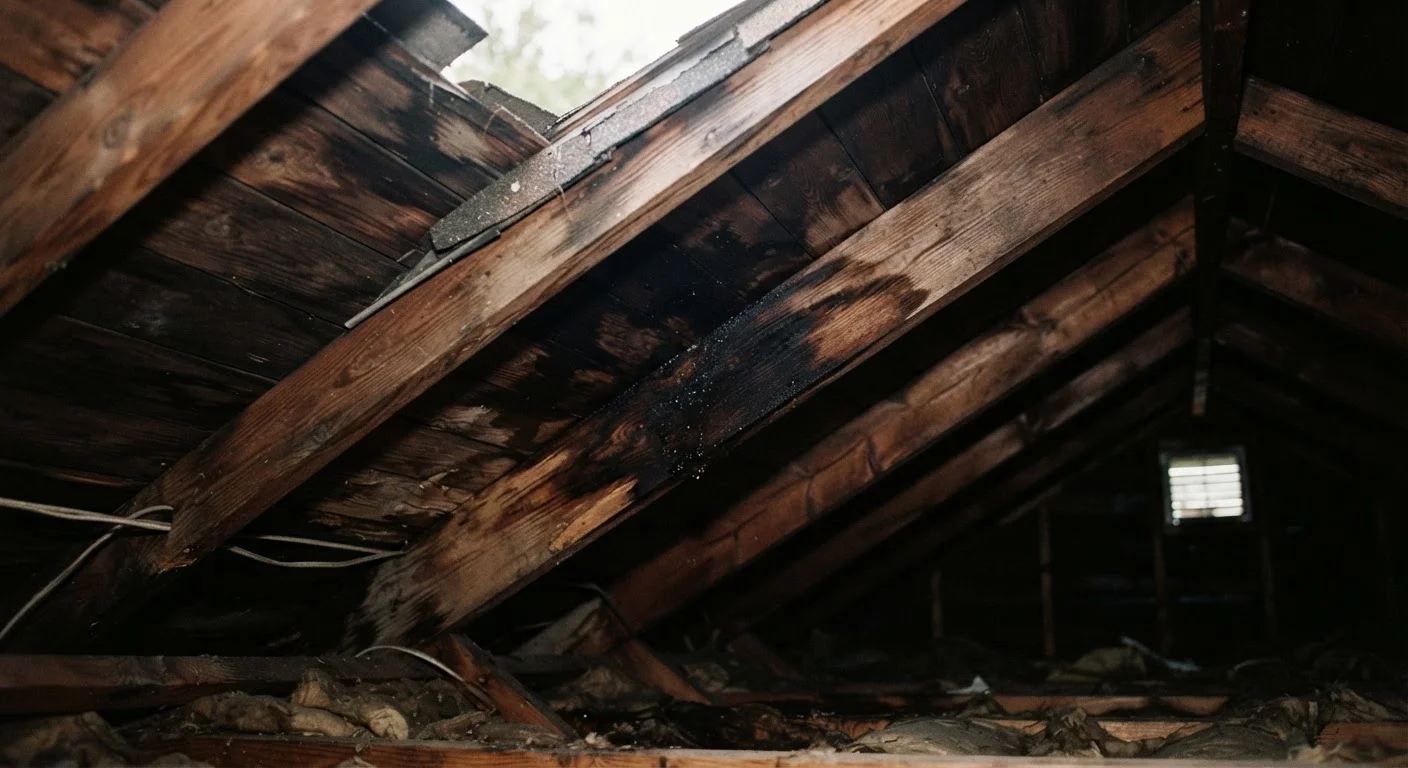
Wood framing is the skeleton of your roof system, and it has a vulnerable relationship with sustained moisture. When wood stays wet long enough for its moisture content to exceed approximately 19%, conditions become favorable for wood-decay fungi. These organisms break down the lignin and cellulose that give lumber its strength - a process commonly called dry rot, though the wood must actually be wet to initiate decay.
Rot doesn't announce itself. It progresses silently inside wall cavities and attic spaces, softening rafters and ridge boards that your roof's weight depends on. In advanced cases, structural members that should be firm enough to walk on become soft and crumbling. At that point, the repair stops being a roofing job and becomes a structural remediation project - one that can involve shoring up framing, replacing sheathing, and addressing damage that has spread to adjacent systems.
24-48 hrs
Time for mold to begin growing on wet materials
According to the U.S. Environmental Protection Agency, mold can begin developing on damp building materials within one to two days under the right conditions.
~19%
Wood moisture content threshold for decay fungi
Wood science research widely cites approximately 19% moisture content as the level above which wood-decay fungi become active, according to guidance from the USDA Forest Products Laboratory.
40%
Of homeowner insurance claims related to water damage
Water damage and freezing consistently represent one of the largest categories of homeowner insurance claims, according to insurance industry data compiled by the Insurance Information Institute.
Moisture traveling downward doesn't stop at the ceiling, either. In homes where a roof leak goes unaddressed, water can eventually reach exterior wall framing, insulation cavities, and in some cases migrate toward the home's foundation system. For a deeper look at how water affects lower levels of a home, see our article on keeping your basement dry.
The Mold Factor: A Separate but Compounding Problem
Structural decay isn't the only consequence of a slow leak. Mold is a separate and fast-moving problem that can begin colonizing wet building materials within 24 to 48 hours. Attic spaces are particularly susceptible: they are often warm, poorly ventilated, and stocked with organic materials - wood, insulation, cardboard - that mold readily consumes.
Mold remediation in an attic or ceiling cavity is costly and disruptive. Beyond the financial impact, mold colonies can affect indoor air quality throughout the home as spores circulate through HVAC systems and living spaces. Homeowners dealing with unexplained respiratory irritation or persistent musty odors should consider having the attic inspected, not just the roof surface.
Check Your Attic After Every Major Storm
You don't need a professional to do a basic attic check after heavy rain or hail. Bring a flashlight and look for wet insulation, dark streaking on rafters, or daylight visible through the deck. Even a brief visual inspection every few months can help you catch early moisture issues before they become structural problems.
It's also worth noting that gutters play a meaningful role in keeping roof leak risk manageable. When gutters are clogged, water backs up under shingles at the eave - a common and underappreciated entry point for leaks. Our companion article on gutter maintenance and function covers how this failure mode develops and how to prevent it.
Warning Signs Every Homeowner Should Know
Catching a roof leak early means knowing what to look for before a ceiling stain appears. In the attic, look for dark streaks or staining on rafters and sheathing, soft or spongy spots in the wood, and daylight visible through the roof deck. A musty smell during or after rain is a reliable early indicator. Outside, cracked, curled, or missing shingles signal areas where water can enter, as do gaps or rust around flashing at chimneys, skylights, and vent pipes.
Inside the home, keep an eye on the condition of paint near exterior walls and on upper-floor ceilings. Peeling paint, hairline cracks along ceiling seams, and unexplained increases in indoor humidity can all point to water entering the building envelope. None of these signs are definitive on their own, but clusters of them warrant a professional roof inspection.
Routine inspections - ideally once a year and after any significant storm - give you the best chance of catching problems before they compound. A licensed roofing contractor can identify deteriorating flashings, worn sealants, and shingle damage that isn't visible from street level. The cost of an inspection is modest compared to the cost of repairing rot or remediating mold - or dealing with the broader moisture issues described in our explainer on what waterproofing a basement actually means.
This article is for general informational purposes only. Roof repair and structural assessment should be performed by or in consultation with a licensed roofing or construction professional. Always verify local building code requirements and obtain necessary permits before undertaking repairs.