

Key Takeaways
Why These Rules Cause So Much Confusion
Traffic laws around merging, yielding, and right-of-way are taught in driver's education, yet they remain among the most misapplied concepts on American roads. Part of the problem is that these rules interact with each other in ways that aren't always intuitive - and informal habits often drift far from legal requirements over time.
It's also worth understanding a foundational legal point: in the United States, no law grants any driver the right-of-way. Instead, traffic codes specify who must yield. The distinction matters practically. Assuming you have the right-of-way and proceeding without confirming the other party is yielding is a significant contributor to intersection and merge crashes. For a broader look at the rules protecting pedestrians in these scenarios, see pedestrian right-of-way rules.
Treating the on-ramp as a shared responsibility during highway merges.
Why it happens: Many drivers believe highway traffic must create a gap for merging vehicles, either as a courtesy or legal requirement.
Stopping or slowing sharply at a yield sign when no conflicting traffic is present.
Why it happens: Drivers conflate 'yield' with 'stop,' particularly when unfamiliar with a road or anxious about traffic.
Assuming the vehicle that arrives later at a four-way stop must wait indefinitely.
Why it happens: Impatient drivers sometimes wave others through out of sequence, creating confusion about who actually has the right-of-way.
Turning left across oncoming traffic before confirming all lanes are clear.
Why it happens: Drivers often watch the nearest lane and misjudge the speed or proximity of vehicles in farther lanes, or assume a gap is larger than it is.
Blocking the passing lane and forcing drivers behind to merge around you.
Why it happens: Some drivers feel safer in the left lane or misunderstand that it is for passing only, not sustained travel at any speed.
Merging: The Zipper and the On-Ramp
One of the most contested behaviors on American highways is the merge. Drivers argue about who should move over, when to merge, and whether holding your position makes you a courteous driver or an obstacle.
~40%
Of all U.S. traffic crashes occur at intersections
The Federal Highway Administration has consistently identified intersections as the location of a large proportion of all traffic collisions in the United States.
~50%
Reduction in merge-related backups with zipper method
State DOT studies, including research from Minnesota and Missouri, have found that late zipper merging can reduce backup length by approximately half compared to early single-lane merging.
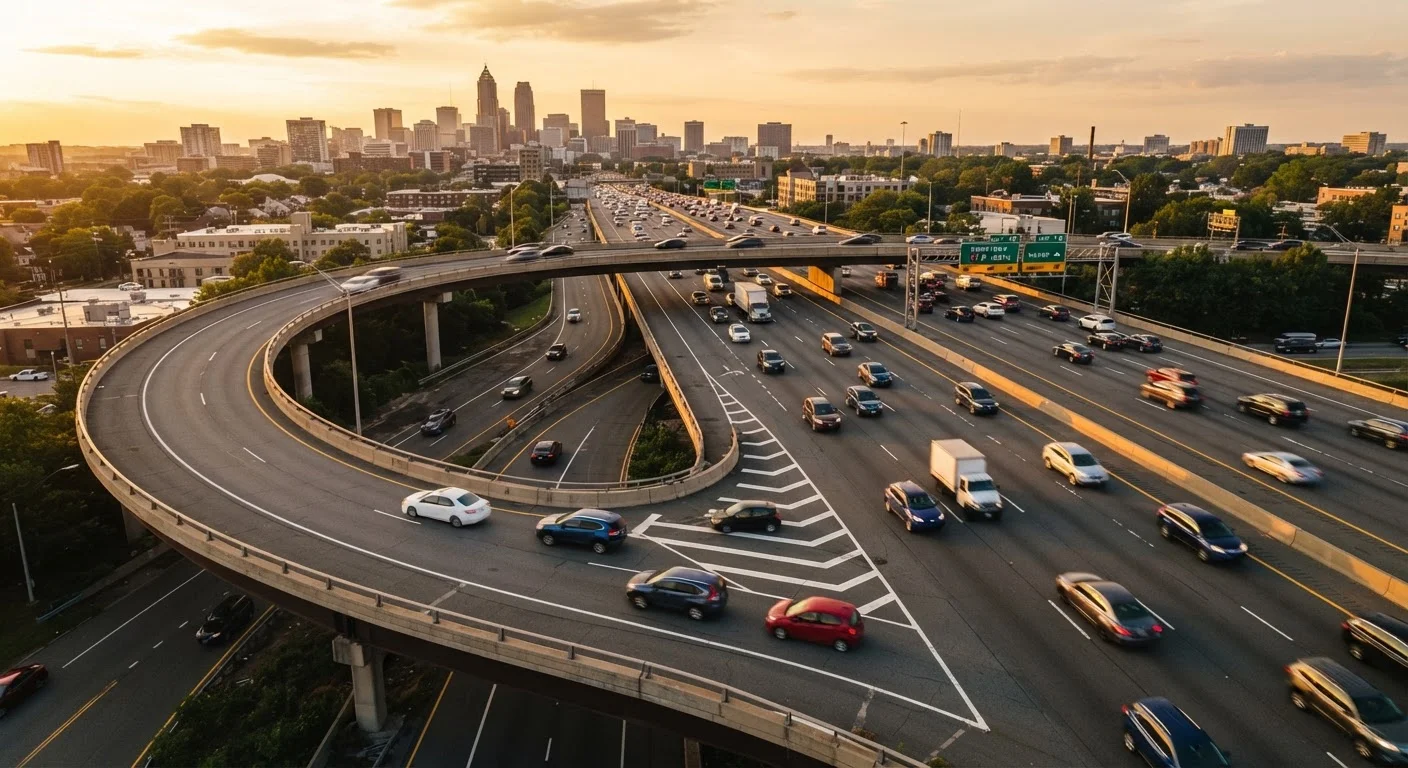
The legal standard is clear: when entering a highway from an on-ramp, the merging driver must yield to vehicles already traveling in the through lanes. Highway traffic is not obligated to accommodate an entry - though maintaining consistent speed and spacing makes merging safer for everyone.
When two lanes are forced to merge into one due to a lane closure or road narrowing, the recommended and widely endorsed approach is the zipper merge: drivers use both lanes fully until the merge point, then alternate one vehicle at a time. Research from state transportation departments suggests this method reduces backup length and crash risk compared to early single-file merging. Aggressive blocking of the merging lane - whether intentional or not - creates the bottlenecks many drivers blame on late mergers.
Understanding how these dynamics play out near large commercial trucks is also important. Sharing the road with large trucks requires additional awareness of blind spots and longer stopping distances during any merge.
Intersections and Right-of-Way: What the Law Actually Says
Intersections are where right-of-way misunderstandings cause the most harm. The rules differ meaningfully depending on intersection type, but several principles apply broadly.
Never Assume the Other Driver Will Yield
Even when you have the legal right-of-way, proceeding without confirming the other vehicle is actually yielding puts you at serious risk. Traffic law assigns fault after a crash - it does not prevent one. Always verify that conflicting traffic has stopped or slowed before entering an intersection or completing a merge.
At a four-way stop, the driver who comes to a complete stop first proceeds first. When two vehicles stop simultaneously, the driver on the left yields to the driver on the right. When facing each other and turning, a driver turning left must yield to oncoming traffic going straight.
At uncontrolled intersections - those with no signs or signals - drivers must yield to any vehicle that has already entered the intersection, and to vehicles approaching from the right when arriving simultaneously.
At T-intersections, drivers on the terminating road must yield to through traffic. This rule is widely ignored in residential neighborhoods, where drivers often treat familiarity with a route as a substitute for legal awareness.
Aggressive assumptions about right-of-way can quickly escalate beyond traffic law violations. For insight on keeping assertiveness from becoming dangerous, see where assertive driving crosses into road rage.
This article provides general information about traffic law concepts and is not a substitute for your state's driver's manual or legal counsel.